
Why You Don’t Need “Expert Status” to Share Something Valuable
You’re already enough to teach, lead, or inspire. Here’s why.

I remember the time when I first started as a teaching assistant for a data science bootcamp.
It was just a couple months after finishing my master’s program, and I was excited, motivated, and—honestly—proud.
Until I wasn’t.
When the program kicked off, I saw the list of students. A group of PhDs from top-tier schools. People who had done way more research than I ever had.
People I thought… should be teaching me.
A little voice inside me wondered, “Who am I to help them? I’m not an expert.”

But as I started working with them, something shifted.
I realized I actually had things they didn’t—experience with applied tools, real-world projects, industry interviews, and storytelling with data.
They were brilliant in the fields they were in, and so was I. And that’s exactly why they were there: to learn the part I had already gone through.
It was around that same time I started writing technical blog posts, where I’ve developed an online presence with more than 100K+ views and made my first income from writing.
I did it not because I felt like an expert—but because I wanted to document what I was learning, share my process, and create notes for my future self.
I didn’t expect many people would read them. But they did.
Some even reached out saying those posts helped them land and pass interviews, and that they now understand a concept better. ☺️
👯 That taught me something I’ll never forget:
You don’t need to have everything figured out to help others.
Everyone has something they can teach others about.
It’s easy to think “I’m not an expert, so I have nothing valuable to say.”
This belief often keeps us silent at work, waiting for other “experts” to share their knowledge or contribute.
In fact, in many situations, no one knows the right answers, and your unique perspective is often what people need most!!
Every stage of your growth offers something valuable—both for you and those around you. Don’t underestimate any small things you know. (i.e Just this week, I introduced Notion Mail with a colleague to help them organize their personal emails, and they were blown away by how much it improved their workflow! Not everyone knows what you know, and they’ll thank you for teaching them something new.)
So many of us stay quiet—not because we have nothing to offer, but because we think we are not “qualified enough” to speak.
This belief is exactly what’s keeping you invisible at work and stopping you from building your personal brand.
Here are why you don’t need “expert status” to be helpful — and how to flip it.
1/ People connect more with someone who’s just a few steps ahead
You’re probably a few steps ahead of someone who feels lost in something you’ve figured out.
Whether it’s managing a tough job, finding confidence, learning a new skill, or navigating rejection — people often find it more helpful and relatable to hear from someone who just figured it out recently, rather than someone who’s 10 years in and barely remembers what it was like to start.
❇️ Flip it: Instead of downplaying what you’ve learned, share what you wish you knew back then as if you’re talking to a past version of you— because someone out there is in that exact place right now.
2/ You were chosen for a reason—your perspective matters
You’re not in that role, meeting, or room by accident. Whether you’re an intern or a new hire, someone invited you in because they see value in you.
Companies and individuals choose you because you bring a unique mix of curiosity, life experience, and instinct that no one else does.
❇️ Flip it: Instead of waiting for more years or certifications to “deserve” to speak up, remember: you’re already someone others want to hear from. Start seeing yourself that way too.
3/ No one knows everything—not even the experts
The more you know, the more aware you become of what you don’t know. That’s growth.
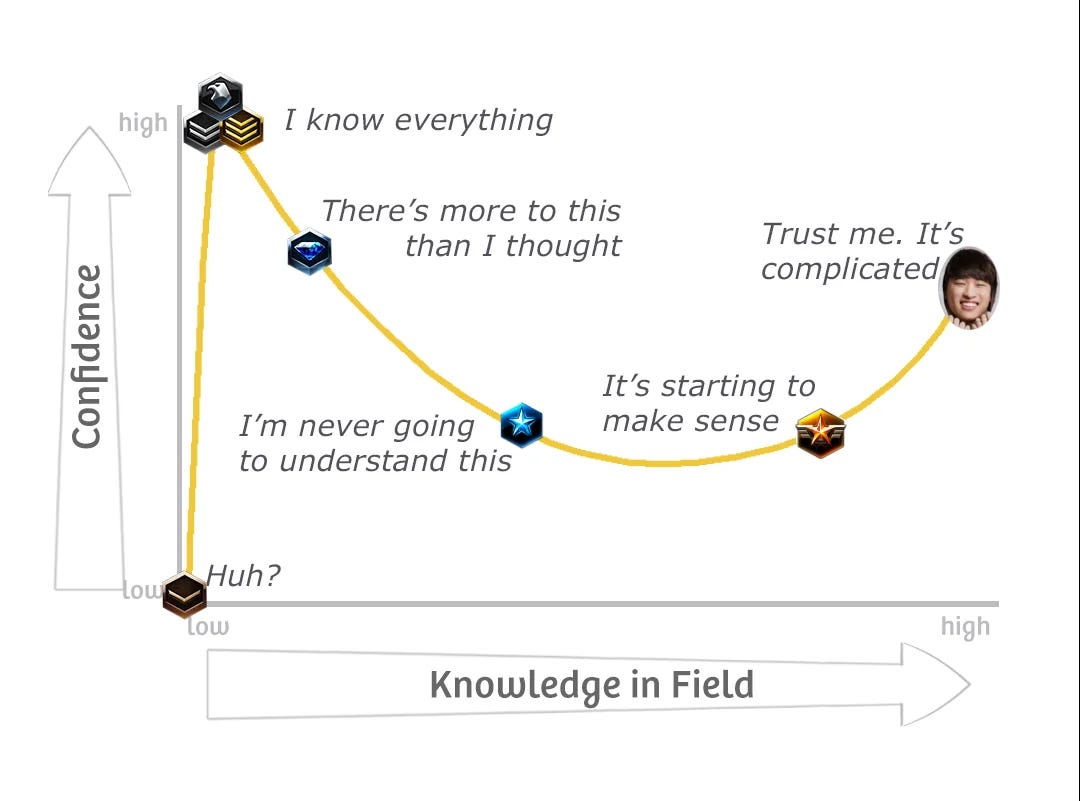
In fact, research shows that people who know very little often overestimate their abilities (a bias known as the Dunning-Kruger effect), while those who’ve actually learned more tend to doubt themselves.
❇️ Flip it: Self-doubt doesn’t mean you’re unqualified—it means you’re self-aware. Don’t aim to be the smartest in the room. Aim to be a helpful person who shares what you know and help someone move forward.
4/ Your imperfect sharing gives others permission to do the same
When you show up honestly—without pretending to be perfect—you create room for others to speak up. That’s leadership. 💪🏼
Your small act of sharing what you know (even if it feels basic) might be the nudge someone else needs to ask a question, try something new, or believe in themselves.
❇️ Flip it: Stop waiting for a title to lead, to see yourself as an expert. You already have something worth sharing—because everyone has something to teach.
💭 Final Thoughts
You don’t need “expert status” to lead, inspire, or create value.
You just need to stop shrinking yourself.
So write the blog and LinkedIn post.
Start the conversation. Tell your story.
Because someone out there is Googling exactly what you just figured out.
Xoxo,
Kessie 🧚♀️